
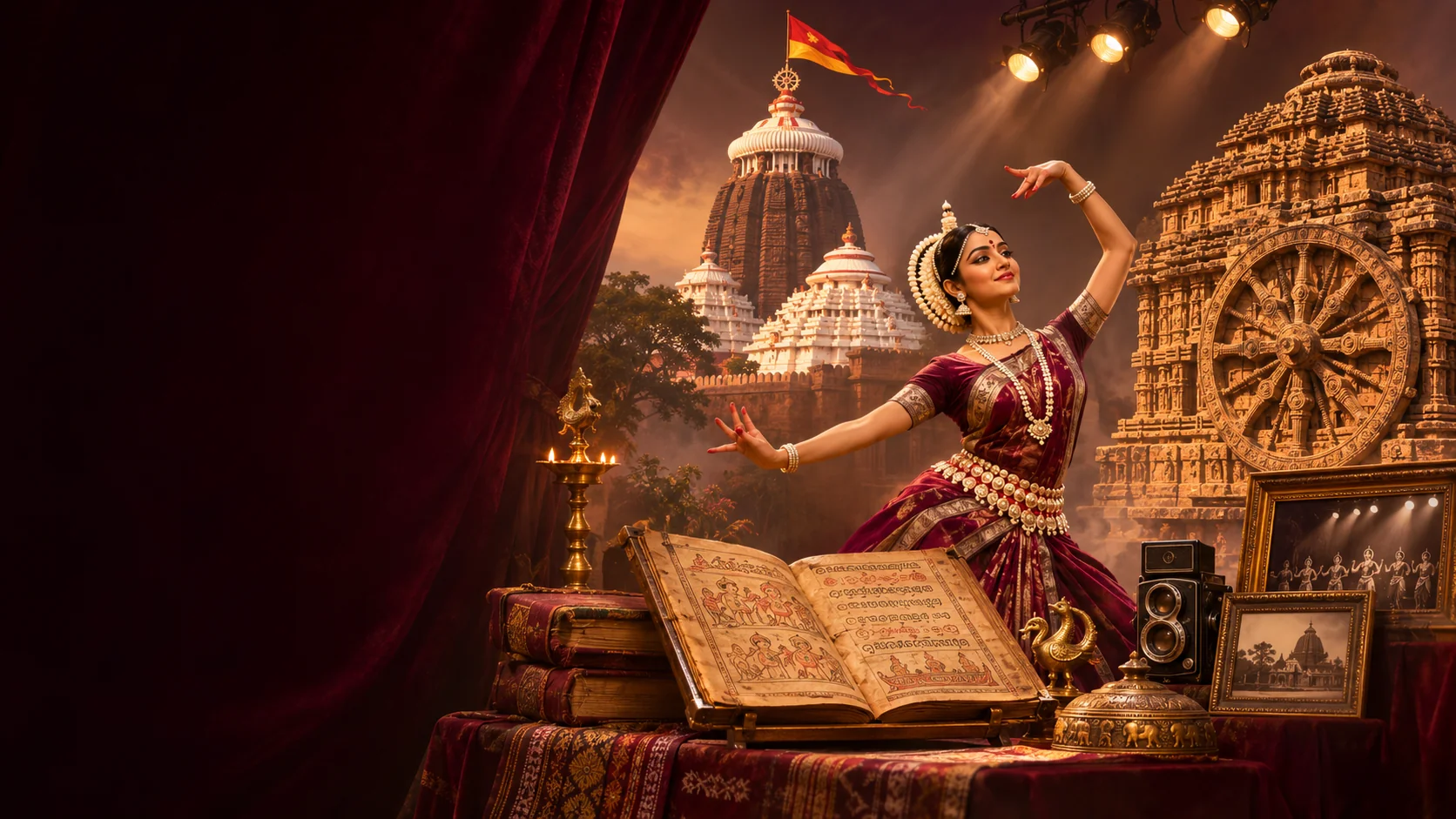
An Idea That Became an Institution.
Some journeys are defined by the positions we hold. Others are defined by what we create, the people we bring together, and the institutions we help build.
For Santanu Das, the South Asian Performing Arts Foundation (SAPAF) represents one of the defining chapters in that journey—a remarkable convergence of his passion for performing arts, creative design, organizational leadership, and ability to transform ambitious ideas into meaningful cultural experiences.
In June 2006, Santanu co-founded the South Asian Performing Arts Foundation (SAPAF) in Tulsa, Oklahoma, with a mission to promote and preserve the traditional classical and folk arts of India and the broader South Asian region while fostering greater cultural awareness and understanding among diverse communities in Oklahoma.
What began as a cultural vision grew into an organization presenting distinguished artists, theatrical productions, musical performances, educational workshops, and community programs.
Creating the Name, Identity, and Vision
Santanu’s contribution to SAPAF began at its very foundation.
Beyond his role as Co-Founder and Founding Director, he personally conceived the organization’s name—South Asian Performing Arts Foundation—conceptualized and designed its original logo, and created its defining tagline:
“Promoting Arts, Creating Awareness.”
These were not merely branding elements. They expressed the organization’s fundamental purpose: to make artistic traditions accessible, inspire appreciation across cultures, and create opportunities for performing arts to reach audiences beyond their traditional communities.
The development of SAPAF’s identity reflected Santanu’s broader approach to creative and institutional work—bringing together a meaningful vision, a recognizable identity, and the organizational framework necessary to turn ideas into action.
He subsequently served in SAPAF’s leadership, including as President, contributing to the organization’s development, programming, and cultural initiatives.
From Concept to Curtain Call
One of the most significant dimensions of Santanu’s involvement with SAPAF was his hands-on responsibility for planning, managing, and executing its performing arts productions.
Across the 2006–2015 period documented in this archive, his work extended throughout the production lifecycle—from initial concepts and event planning to artist coordination, scheduling, venue arrangements, technical and logistical coordination, publicity, show management, and final execution.
These responsibilities required the integration of creative judgment, organizational discipline, technical understanding, and practical problem-solving.
Working alongside talented artists, dedicated volunteers, organizational colleagues, sponsors, venues, and production partners, Santanu helped bring performances of different scales and artistic traditions to stages across the Tulsa region.
His role was not limited to presenting completed productions. He was actively involved in turning the original idea into the audience experience, coordinating the many moving parts necessary to deliver a professional event.
For Santanu, a successful production was never defined by the performance alone. It was the result of everything that happened before the curtain rose—and the commitment required to see the vision through to completion.
A Decade of Memorable Performances
SAPAF’s programming encompassed an extraordinary range of artistic expressions: Indian classical dance, Hindustani and Carnatic music, instrumental concerts, musical theater, contemporary fusion, popular Indian music, comedy, and community participation.
The journey began in 2006 with the three-part Rhythms of India classical dance series, featuring Kathak by Nirupama and Rajendra, Odissi by the Rudrakshya ensemble, and Bharata Natyam by Priyadarsini Govind.
In subsequent years, the foundation presented distinguished performers and ensembles, including Ustad Amjad Ali Khan, Indian Ocean, Chitravina N. Ravikiran, Ustad Zakir Hussain, Shashank Subramanyam, Shahid Parvez, and the Menaka Thakkar Dance Company, among others.
The programming also embraced theatrical storytelling and contemporary musical experiences, including Kabeer by Shekhar Sen, Vision of Forever with Ramli Ibrahim and the Sutra dancers, Kailash Kher with Kailasa, and performances by Ranjani and Gayatri.
Other notable productions during these years included Gatha Odissi / Krishna, concerts featuring Nitin Mukesh and Padma Shri Hariharan, 100 Years of Bollywood, and an evening with Anuradha Paudwal.
The 2015 programming featured Kathakali: The Story of Othello, The Melodious Percussion Trio, The Immortal Note… Pancham—a tribute to R. D. Burman—and Nitin Mukesh Live in Concert.
Together, these productions reflect the breadth of cultural programming Santanu helped deliver, bringing accomplished artists and diverse traditions to Oklahoma audiences.
The Creative Vision Behind Every Poster
An equally distinctive aspect of Santanu’s SAPAF involvement was his creative contribution to the organization’s visual communications.
Santanu personally designed the promotional posters for the SAPAF productions documented in his original artwork collection, developing designs that reflected the individual character of each performance.
From classical dance and instrumental music to theatrical productions, celebrity concerts, and cultural celebrations, these posters combined typography, imagery, artistic composition, and event information into promotional identities tailored to their audiences.
For Santanu, graphic design was not separate from event production. It was part of the larger experience—helping establish the tone of a performance, communicate its artistic identity, and connect the production with its intended audience.
The surviving collection of original posters provides a visual record of his work in graphic design, creative direction, event marketing, and visual storytelling, alongside his production responsibilities.
These artworks are more than historical advertisements. They document the creativity, technical skills, and attention to detail that accompanied the performances themselves.
Beyond the Stage — Education and Cultural Awareness
SAPAF’s mission extended beyond concert halls and formal stage performances.
The foundation emphasized cultural education and community outreach through workshops, lecture-demonstrations, and opportunities for audiences and students to engage directly with visiting artists.
These initiatives helped introduce traditional art forms to people who might otherwise have had limited exposure to South Asian music, dance, and theatrical traditions.
They also created opportunities for younger generations, educators, and diverse communities to experience art as a form of learning, cultural exchange, and shared understanding.
This approach reflected a belief central to Santanu’s work: the performing arts should do more than entertain. They should educate, inspire, preserve traditions, and connect communities.
An Early Milestone — Oklahoma Governor’s Commendation
SAPAF’s early cultural efforts received an official acknowledgment from the State of Oklahoma.
On July 27, 2006, Oklahoma Governor Brad Henry issued a Governor’s Commendation to the South Asian Performing Arts Foundation, extending an official welcome to the visiting Kathak artists associated with the inaugural Rhythms of India series.
Issued just weeks after the foundation’s establishment, the commendation marked a meaningful early milestone for the organization and its efforts to introduce Indian classical performing arts to Oklahoma audiences.
The recognition was presented to SAPAF as an organization, reflecting the significance of its cultural initiative and the collective work behind it.
Leadership, Commitment, and Recognition
Santanu’s involvement with SAPAF brought together several dimensions of his professional and community life: institution-building, strategic planning, artistic programming, creative communication, and production management.
His roles as Co-Founder, Founding Director, and subsequently President reflected a sustained commitment to the organization’s purpose.
His nonprofit leadership is documented in SAPAF’s historical filings, while his contributions to promoting the arts in Oklahoma were also highlighted in materials supporting his 2015 Oklahoma Governor’s Arts Awards nomination.
These experiences reinforced an approach to leadership that emphasizes collaboration, responsibility, and the ability to bring people and resources together around a common objective.
A Legacy Beyond the Performances
Looking back at the SAPAF years, the significance of this chapter extends well beyond the number of concerts, productions, posters, or programs completed.
It represents the journey of an idea—from choosing a name and designing an identity to establishing an institution, building collaborative relationships, and bringing ambitious performing arts experiences to life.
It also reflects Santanu’s ability to connect disciplines that are often considered separate: leadership and creativity, design and technology, cultural vision and operational execution.
The SAPAF experience remains an important foundation of his continuing work in performing arts production, creative strategy, community leadership, and institution-building.
From the first concept to the final curtain call, from creating an identity to helping build an institution—SAPAF represents a defining chapter in the story of Simply Santanu Das.
Promoting Arts. Creating Awareness. Connecting Communities.
← Back to the archive